



customer apps
Accounts, browsing, orders, payments, service requests and notifications for the people who buy from you, running on iOS and Android.
Loading…
A selection of the companies and products Supremacy Technologies has engineered.








ServiceMobile App Development
Mobile app development at Supremacy Technologies covers iOS, Android and cross-platform applications connected to reliable backend systems and business workflows. We build for customers, employees, drivers, warehouse teams and dealers, and each app is designed as one part of an operational system rather than a stand-alone interface.
Most mobile projects fail at the edges, not on the screen: the network drops in a warehouse, the API was never built for a phone, or the app has no admin side that anyone can run. We start from the work the user does and the system the app must write to, then choose the mobile technology that fits.
Our team works from Chennai and delivers iOS and Android app development for businesses that need the app, the API behind it and the management console to ship as one piece. The app can connect to a platform we build, to software you already run, or to a legacy system being modernised.
Every app below is scoped to a real user and a real workflow, with the backend and admin surface planned alongside it.
Accounts, browsing, orders, payments, service requests and notifications for the people who buy from you, running on iOS and Android.
Assignments, check-ins, checklists, photos, signatures, forms and approvals for staff who work away from a desk.
Receiving, put-away, picking, stock counts and dispatch using the phone camera or a handheld scanner, writing to the same stock record as the back office.
Catalogue, orders, claims and documents for dealers and partners, with access limited to their own organisation's data.
Workflows that keep working without a signal, hold local changes safely and synchronise with clear status and conflict handling when the network returns.
Push messages and in-app alerts tied to events in the system, such as an assignment, an approval or a status change, with controls for what each role receives.
Checkout and payment flows through a payment gateway, with the payment status reconciled against the order record rather than trusted from the device.
Store listings, privacy disclosures, staged rollout, private distribution for internal apps, and the update and compatibility work that follows each release.
A technician or driver opens a job, follows the checklist, captures photos and a signature, and closes it, with the result visible to the office as soon as it syncs.
A barcode or QR scan is checked against the expected item or order on the spot, so a wrong scan is caught at the device and not at the next stock count.
Forms, counts, attendance punches and delivery confirmations are saved locally and queued, so a lost signal never costs the user their work. This is the core of offline-first field apps.
Managers approve requests, expenses and orders from a notification, and the decision writes straight to the system that owns the record.
Customers place orders, track status, raise requests and pay without calling anyone, against the same order data your team works from.
A failed delivery, a damaged item or a blocked job is raised from the device into an exception queue the back office can see and act on.
We work out who uses the app, where they work, what systems it must connect to and whether offline use is needed. Scope, platform choice and the effort involved are settled here, not guessed up front.
We map the workflow end to end and design the screens around it, then test the flow with the people who will use it.
The services the app depends on are built or integrated first, so the mobile work is not blocked on an unfinished backend.
We build in short cycles and test on real devices and operating-system versions, including poor-network and offline conditions.
Authentication, storage, session handling and every device permission the app asks for are reviewed before any release.
A pilot group goes first, then store or private distribution. After launch we handle crash monitoring, compatibility updates and new releases.
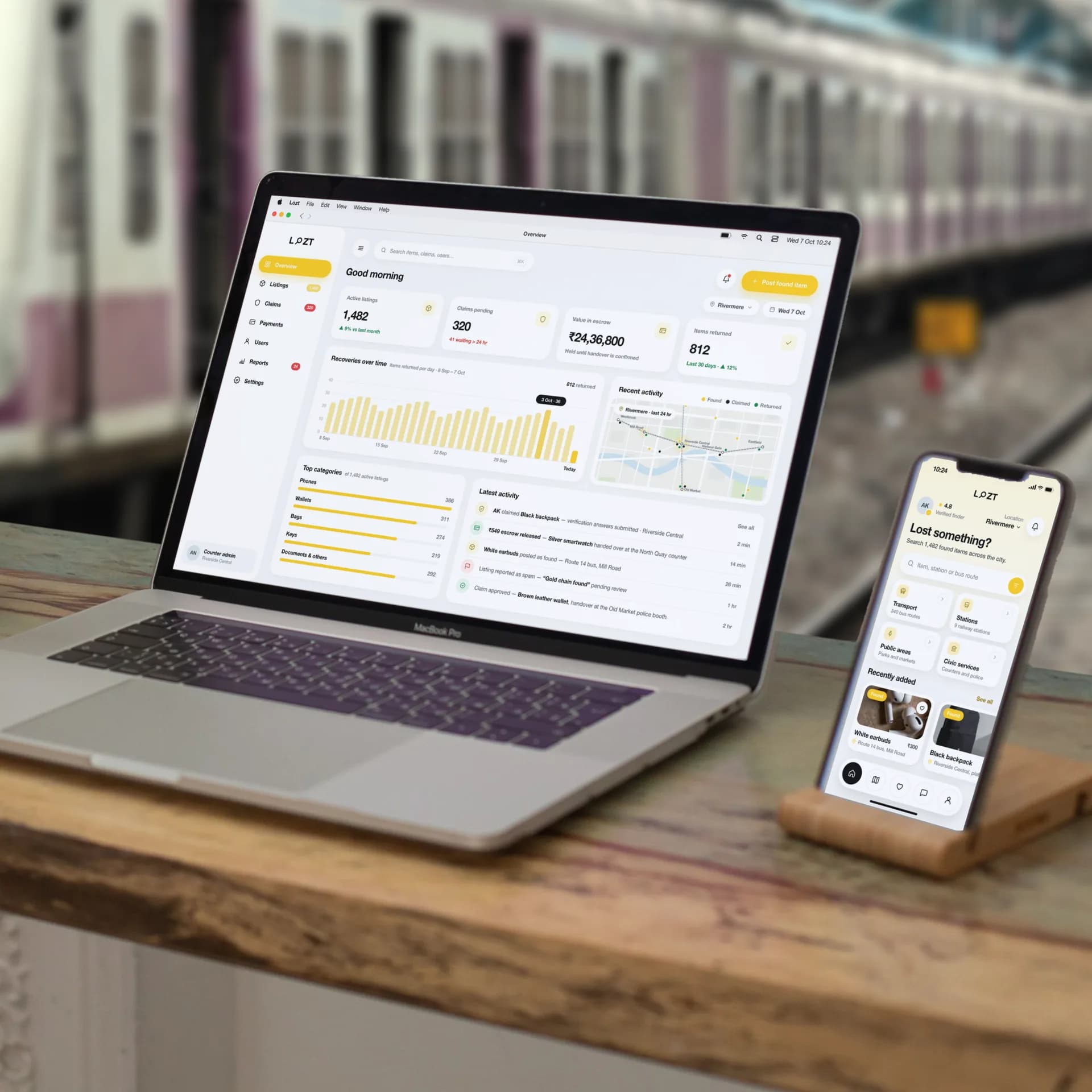
An iOS and Android listing app for a city-wide lost-and-found platform, built with React Native.
Loztapp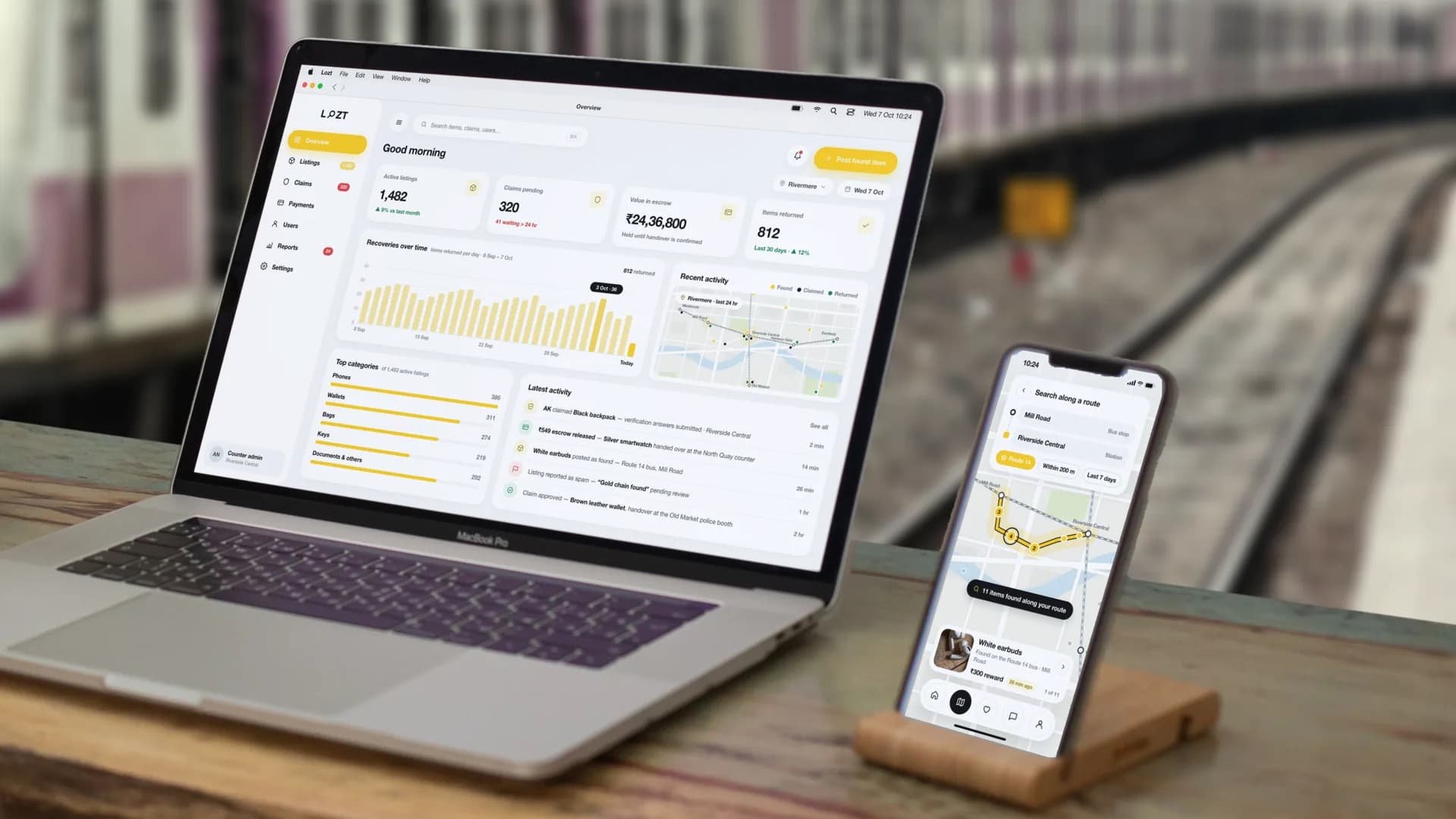
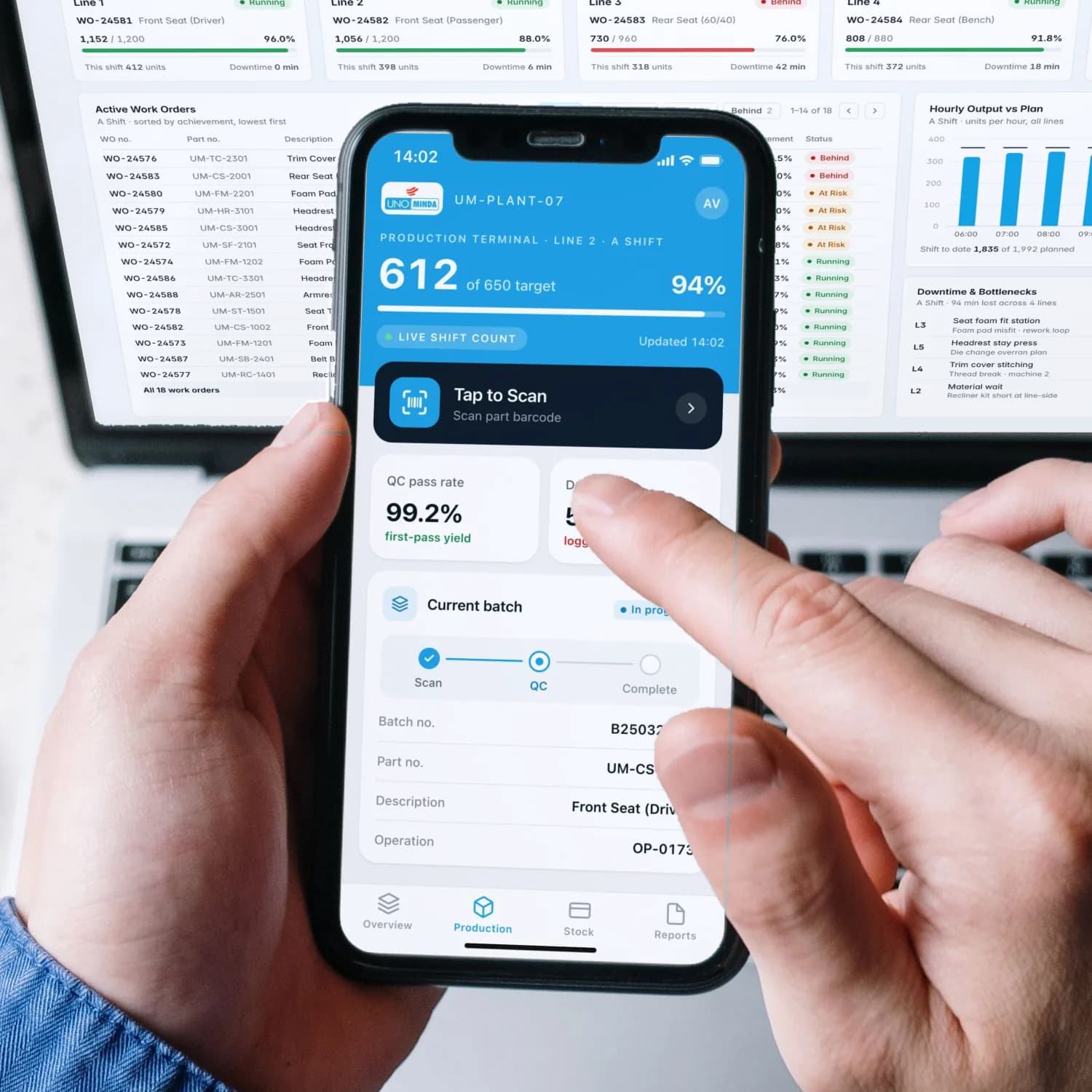
Android terminals at the assembly stations, working on the same records the plant dashboard reads.
UNO Minda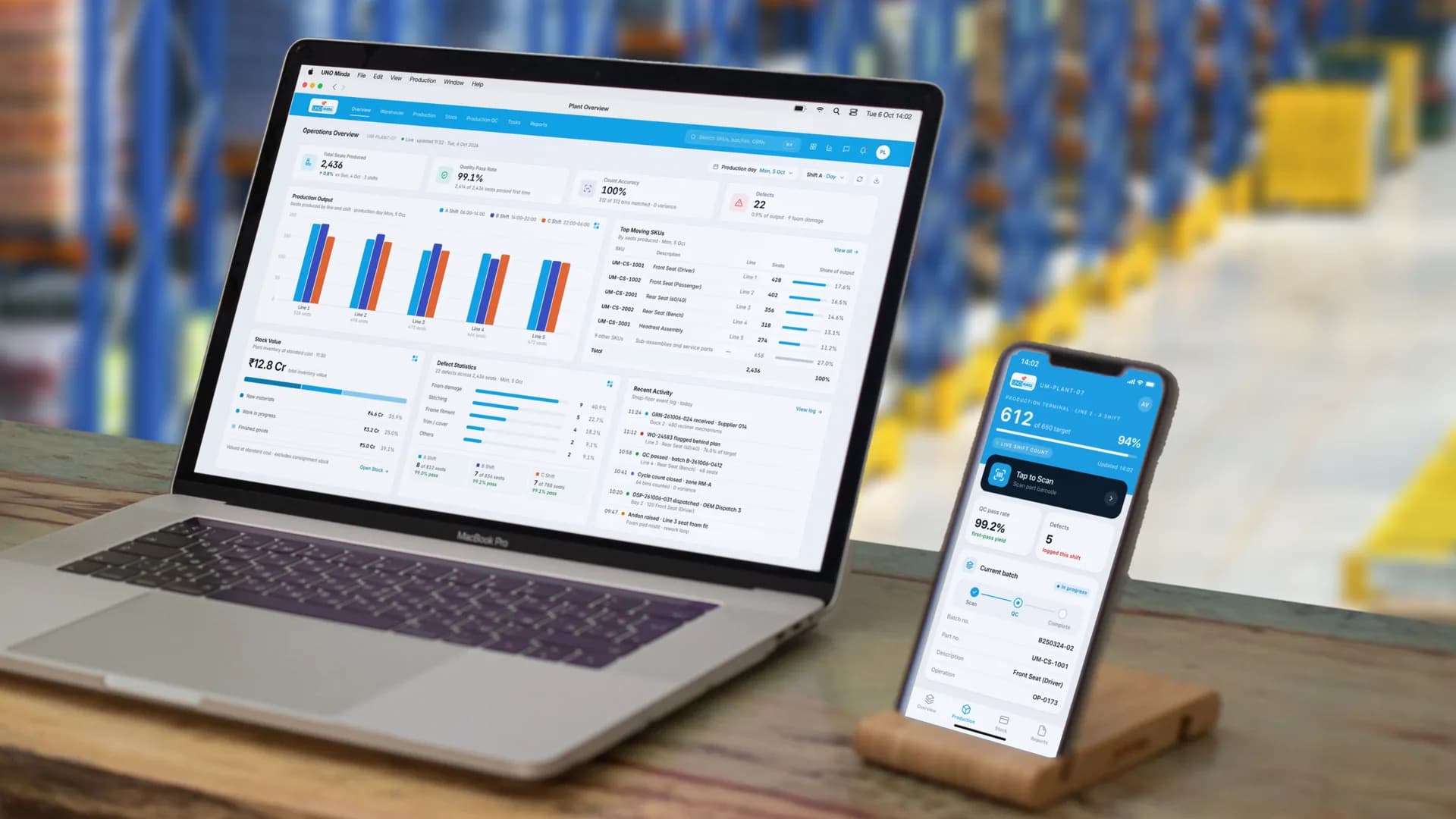

Custom web applications, SaaS interfaces, dashboards, portals, admin systems and transactional products engineered for real operations.
Build multi-tenant SaaS products with scalable architecture, authentication, roles, billing foundations, APIs, admin tools and deployment.

MVP development for startups that need a production-minded foundation, focused scope and a clear path from validation to scale.

Software engineering for logistics and distribution workflows including inventory, fulfilment, operations, portals and reporting.
Supremacy Suite is a business operating system for SMEs: CRM, HRMS, payroll, finance, inventory, manufacturing and projects on one platform.
It depends on the app. React Native suits most business apps because one codebase serves iOS and Android and still reaches the camera, scanner and location. We recommend native when the app needs heavy graphics, unusual hardware or deep platform features. We settle this during discovery.
Yes, where the workflow can be synchronised safely. We agree offline scope per workflow, define how conflicts are resolved and show the user the sync status. Offline use is not assumed for every feature.
Release and publishing support can be part of the engagement. The store accounts, legal details and privacy disclosures stay with you, and approval is decided by Apple and Google. Internal apps can also be distributed privately to employees.
A business app almost always does, for identity, data, rules and administration. We either build those services with the app or connect the app to your existing systems through their APIs. If the old system has no usable API, we assess that during discovery.
It depends on the platforms, the number of workflows, offline needs, device features and how many systems the app connects to. We scope it in discovery and give you a plan before build starts. We do not quote from a headline price.
We can monitor crashes, update for new operating-system releases, manage dependencies, handle incidents and ship new features. Maintenance is agreed as a separate ongoing arrangement after launch.
Start a project
Your name, phone number and what you need are enough to start. Email, company and a message help us prepare. We reply within one working day.