



finance & approvals
Ledgers, payables, receivables and multi-level approvals tied to the transactions that cause them, so every posting can be traced back to a document and an approver.
Loading…
A selection of the companies and products Supremacy Technologies has engineered.







ServiceERP Development
ERP development from Supremacy Technologies delivers custom ERP for finance, operations, inventory, manufacturing, procurement, workflows, reporting and system integrations. We model your approvals, stock movements and handovers as they really happen, then build the system so people work in it instead of around it.
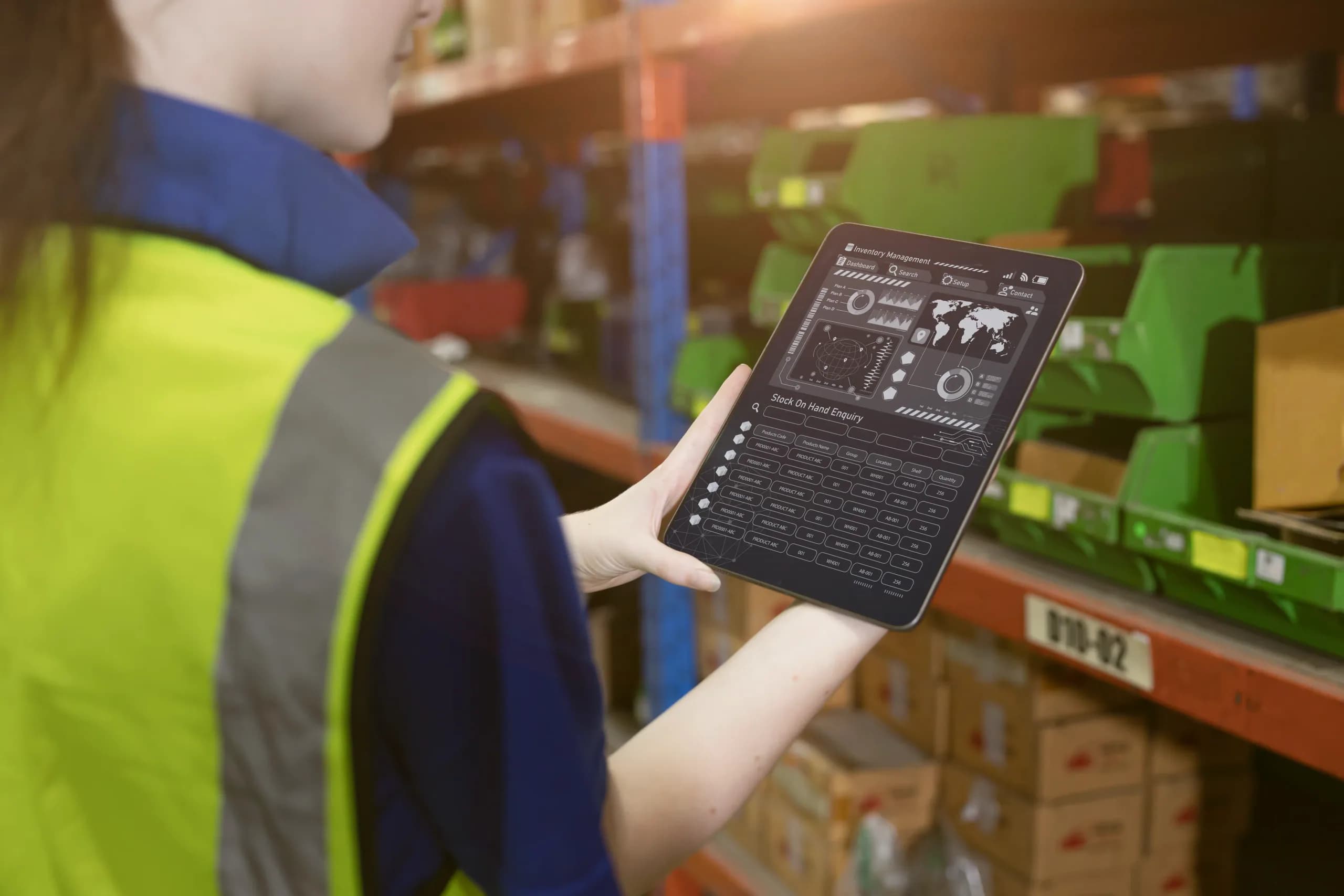
Most companies reach for an ERP when the same figure lives in three places: a spreadsheet for stock, an accounts package for money and a chat thread for approvals. Nobody is sure which one is right, so every month-end starts with a reconciliation.
Packaged ERP asks the business to bend to its screens and its vocabulary. Custom ERP development reverses that: the domain model, the approval routes and the reports are drawn from how your operation runs today, and from where you want it to go.
Teams looking at ERP for SMEs in India usually have the same short list of needs: purchasing under control, stock they can trust, finance that follows operations, and reporting that does not need an analyst. That list is where we start, and the modules are phased so the first release is in use early.
Custom ERP development is a set of modules on one shared data model, delivered in the order your business needs them.
Ledgers, payables, receivables and multi-level approvals tied to the transactions that cause them, so every posting can be traced back to a document and an approver.
Requisitions, vendor quotes, purchase orders and goods receipts in one chain, with price and quantity checks before an order is released.
Stock by item, batch and location across warehouses, with receipts, transfers, adjustments and cycle counts that update the same record.
Bills of material, work orders, material issue and finished-goods receipt, so what was planned, consumed and produced can be compared.
Quotations, sales orders, picking, dispatch and delivery confirmation, linked to stock so a promise to a customer reflects what is actually on the shelf.
Employee master data, departments and approver hierarchies that the rest of the ERP depends on, without turning the ERP into a full people system.
Operational and management reports drawn from live data: stock position, open purchase orders, pending approvals, production against plan.
Two-way connections to Tally and legacy systems where they stay in place, and a planned migration of masters and opening balances where they do not.
A request becomes a purchase order, a goods receipt and a vendor bill, with a three-way match before payment is released.
A sales order reserves stock, triggers picking and ends with a dispatch note and an invoice request, with exceptions routed to a named person.
A work order draws material against its BOM, records output and scrap by stage, and closes with variance against the plan.
Every receipt, issue and transfer is a document, so physical counts can be reconciled to the system and the differences explained.
Rules for who approves what, by amount, department or item type, with delegation when an approver is away.
Cut-off checks, pending-document lists and period locks so the books close from the same data operations used all month.
We map the real process with the people who run it, list the documents and approvals involved, and agree the modules, their order and what the first release must prove.
We settle the shared data model, roles and approval routes, and show working screens before the build, so gaps surface while they are cheap to fix.
Each module ships in a working state to a staging environment you can use, so feedback comes from daily use rather than a document review.
Masters and opening balances are loaded in repeatable runs and reconciled against the old system until the totals agree.
We cut over module by module, train each team on its own workflows and stay close during the first cycles, including the first month-end.
After go-live we handle fixes and agreed changes, and add the next module on the same model without rework.
UNO Minda runs a production management and quality control system with warehouse, production and stock areas that we built for its car seat assembly lines.
UNO Minda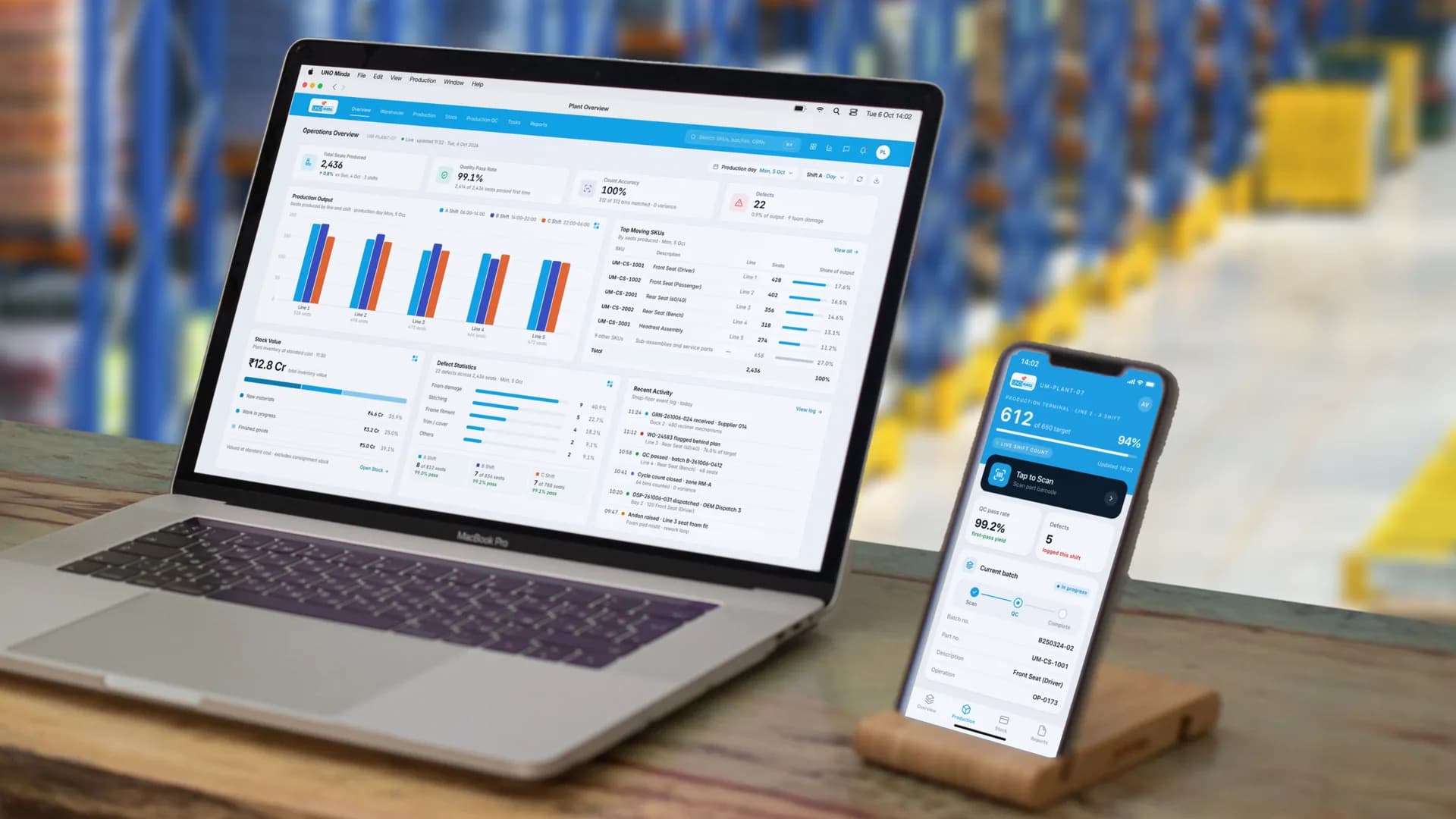

Custom software engineered around unique business workflows, internal operations, integrations and long-term product requirements.

Custom management software for industry-specific workflows, operational systems, internal platforms and business process automation.

Custom warehouse and inventory software for receiving, stock, locations, movement, fulfilment, scanning workflows and operational reporting.

Software engineering for manufacturing workflows including operations, inventory, production, quality, procurement and reporting.

Supremacy Finance supports invoicing, receivables, payables, expenses, ledger workflows and business financial reporting.
A ready-made package is faster to start and fits a process that is already standard. A custom ERP fits when your approvals, stock handling or production steps are the way you compete, and a package would force a workaround. Many businesses start with one or two custom modules and grow from there.
A ready-made suite gives you fixed modules you adopt as they are. A custom ERP is designed around your documents, approval routes and reports, and it can integrate with the tools you keep. The choice is a trade between speed of adoption and fit to your process, and we can talk through both in discovery.
Yes. We map your masters, opening balances and open documents, load them in repeatable runs and reconcile the totals against the old system before cut-over. Where Tally stays in use for accounts, we build the Tally/ERP integration so it keeps running rather than replacing it.
Yes, and we recommend it. Every module sits on the same data model, so the procurement, inventory and finance modules can go live in the order you choose without rebuilding what is already in use. Discovery settles the order based on where the pain is greatest.
GST is not a built-in feature of what we build. Tax filing and e-invoicing are handled through your existing accounting setup, such as Tally, or through an integration with an accounting partner. We design the ERP so the documents and data those tools need are captured correctly.
Yes. An ERP can be deployed on your own server or on a cloud account of your choice, with the same release process either way. Cost depends on the number of modules, the integrations, the volume of data to migrate and the hosting choice, and the discovery step turns those into a scoped plan.
Start a project
Your name, phone number and what you need are enough to start. Email, company and a message help us prepare. We reply within one working day.