












Built module by module
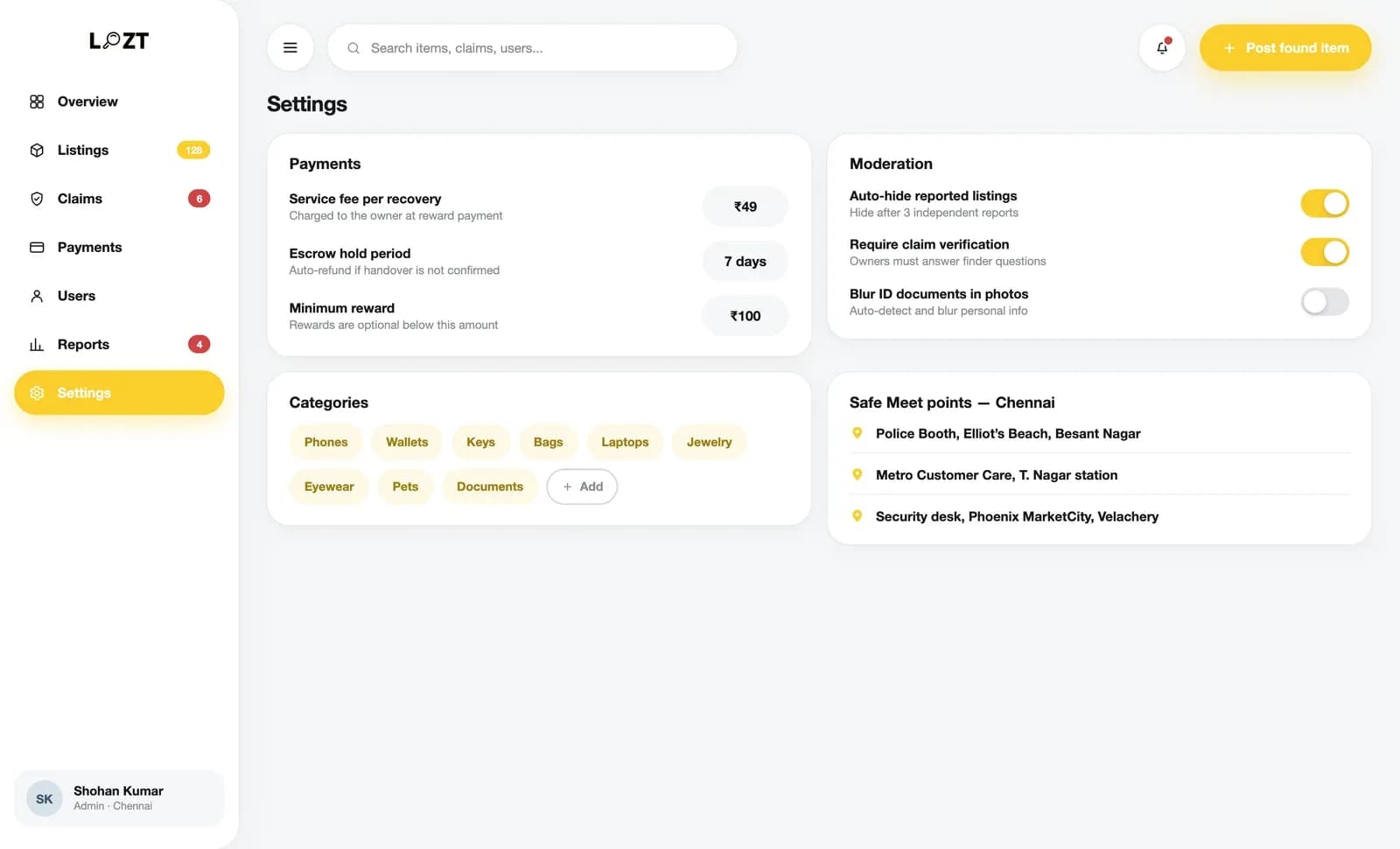
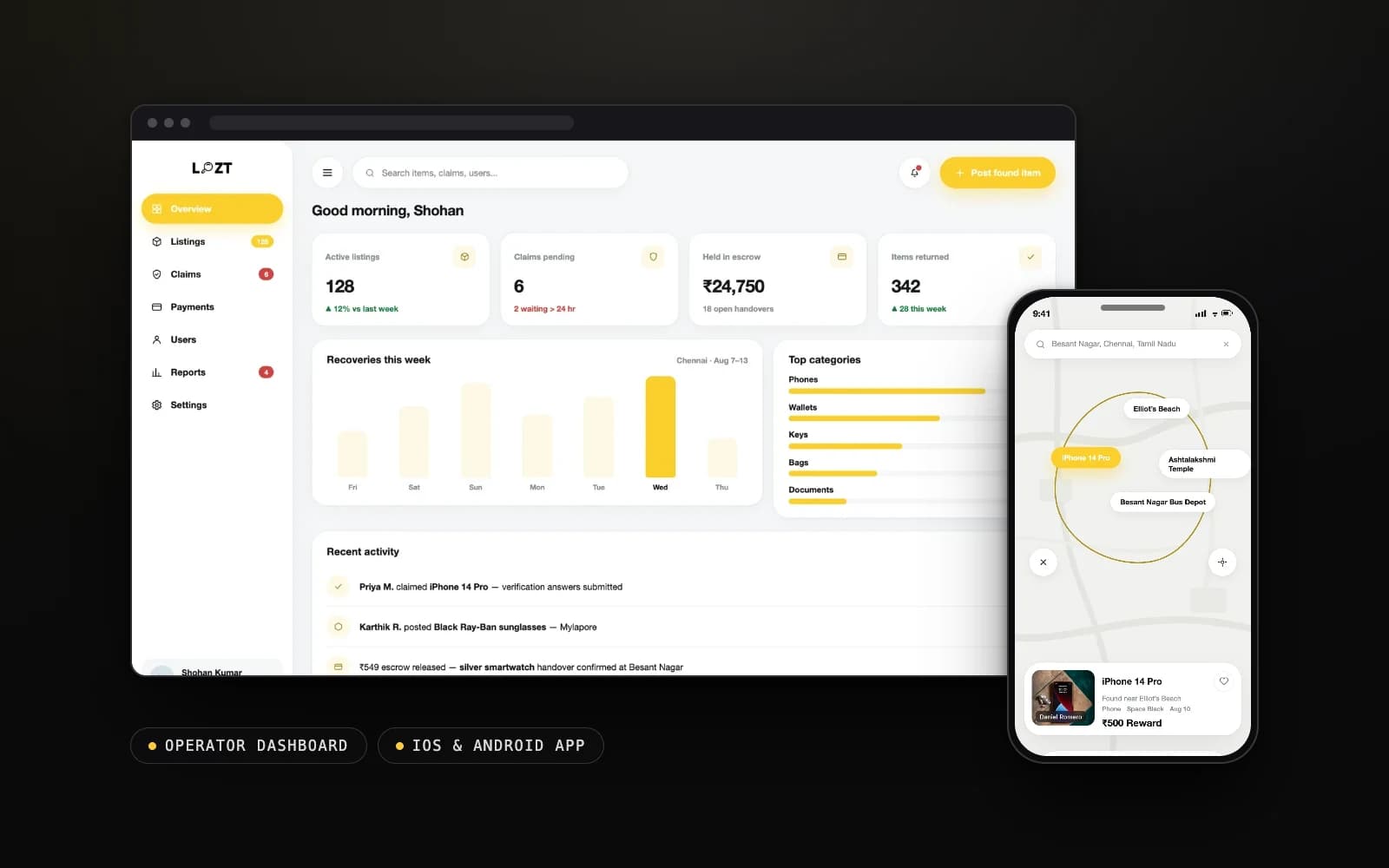
Seven surfaces in the operator console, each delivered production-grade and rolled out in stages — first a single railway line, then the bus network, then open public areas — so coverage grew without a risky city-wide cutover.
- 01Overview
Overview
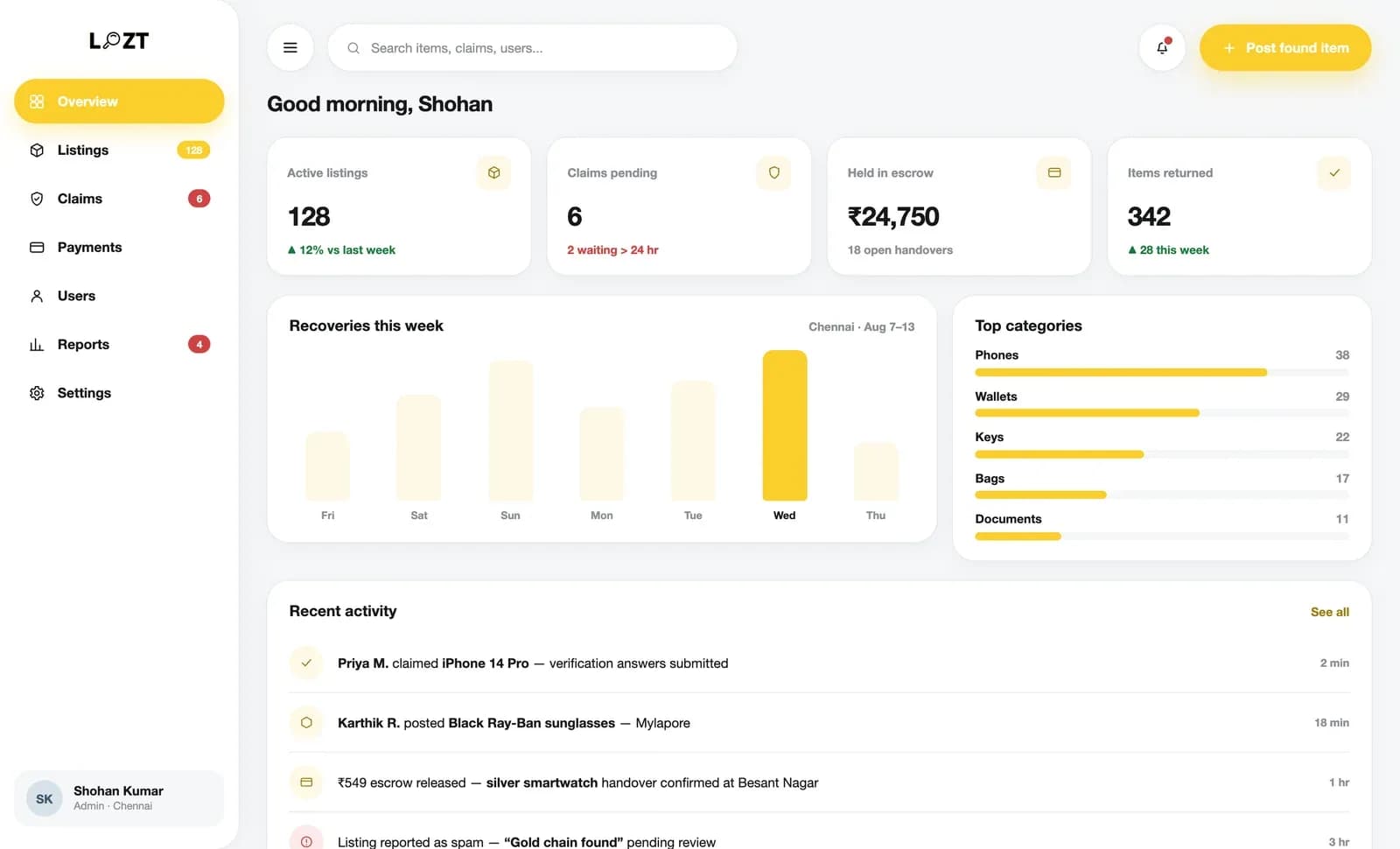
The day in four numbers — active listings, claims pending, value held in escrow and items returned — with a recoveries-this-week chart, the categories the city loses most, and a live activity feed running from claims submitted to escrow released to listings reported.
- 02Listings
Listings
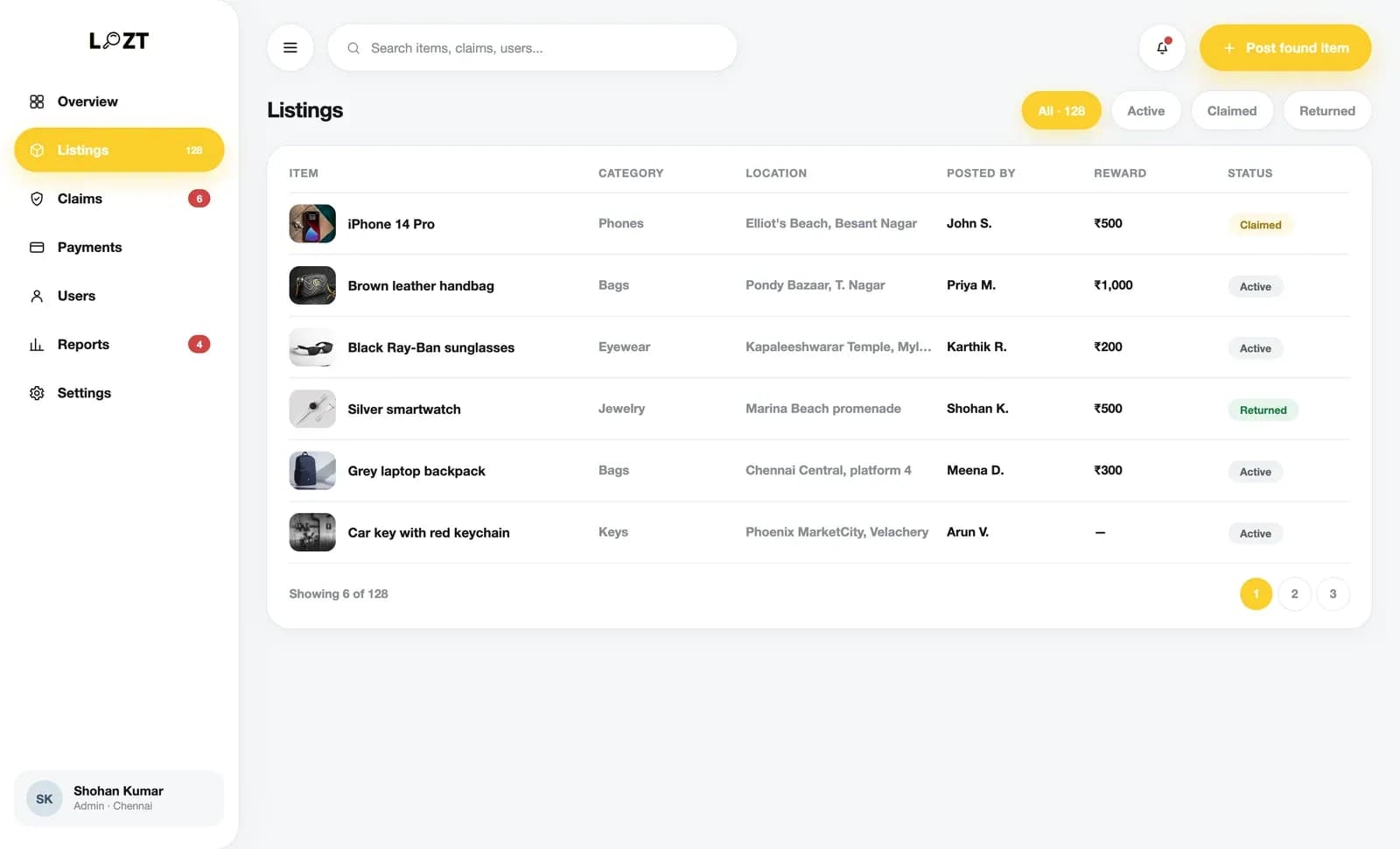
All live items in one filterable table: item, category, location, who posted it, reward and lifecycle state. Filter by Active, Claimed or Returned, search items, claims and users from a single bar, and post a found item on a resident's behalf from the counter.
- 03Claims
Claims
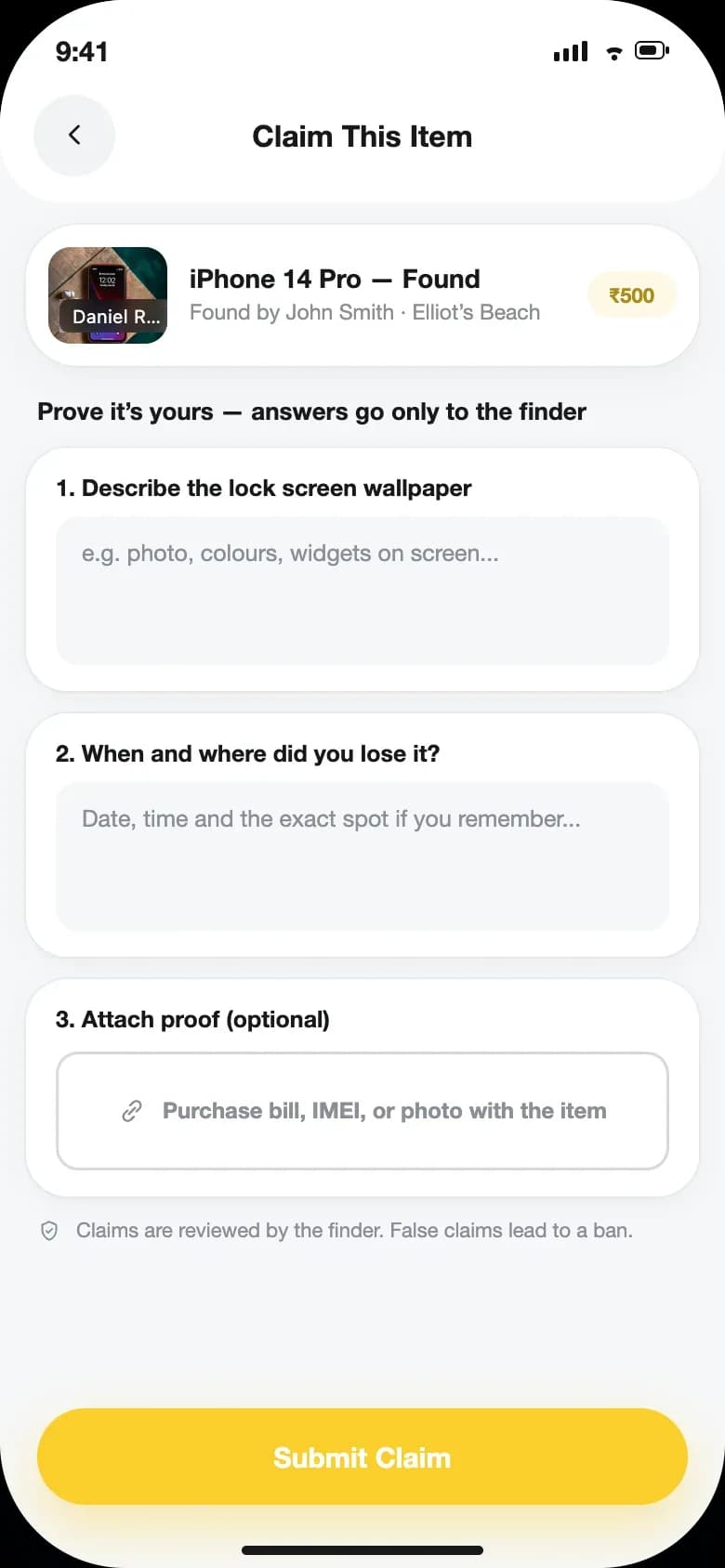
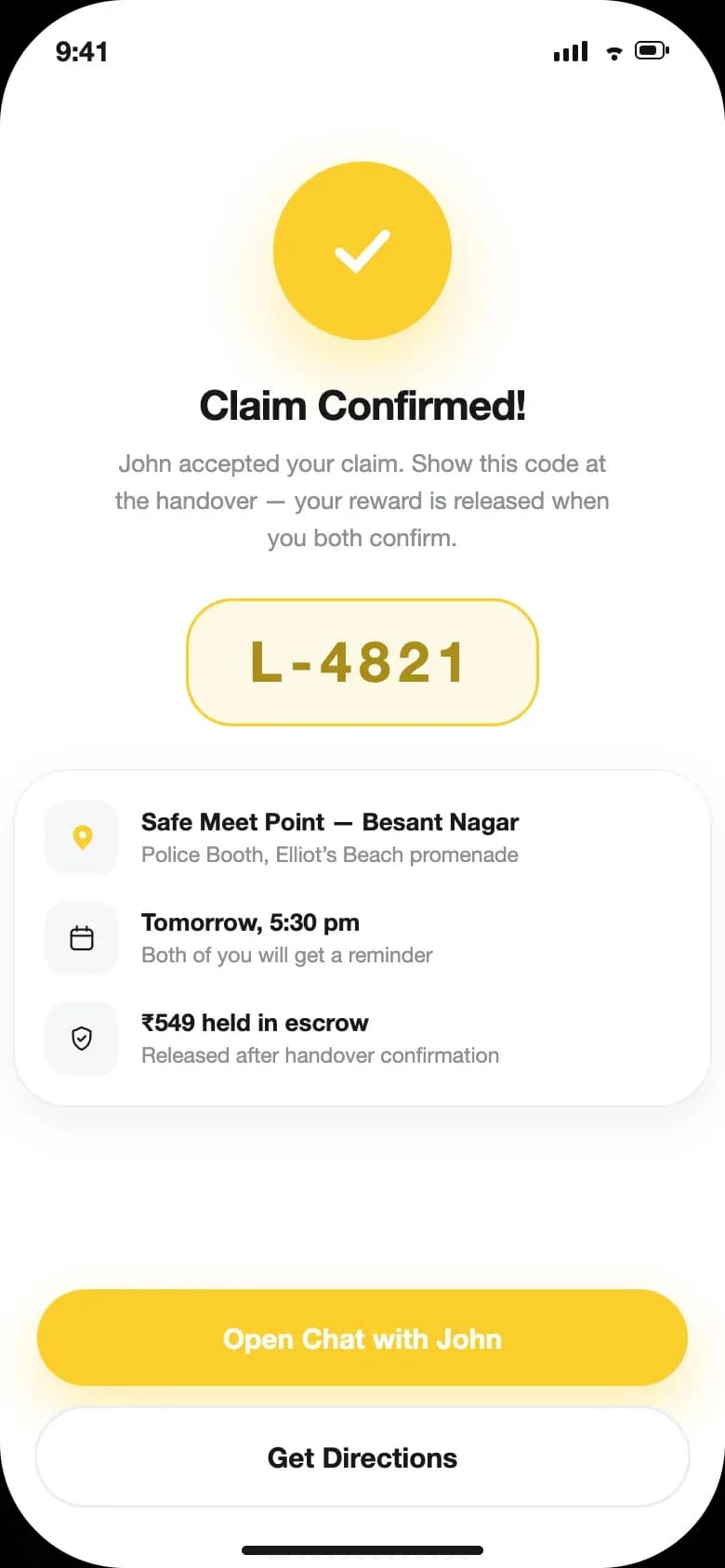
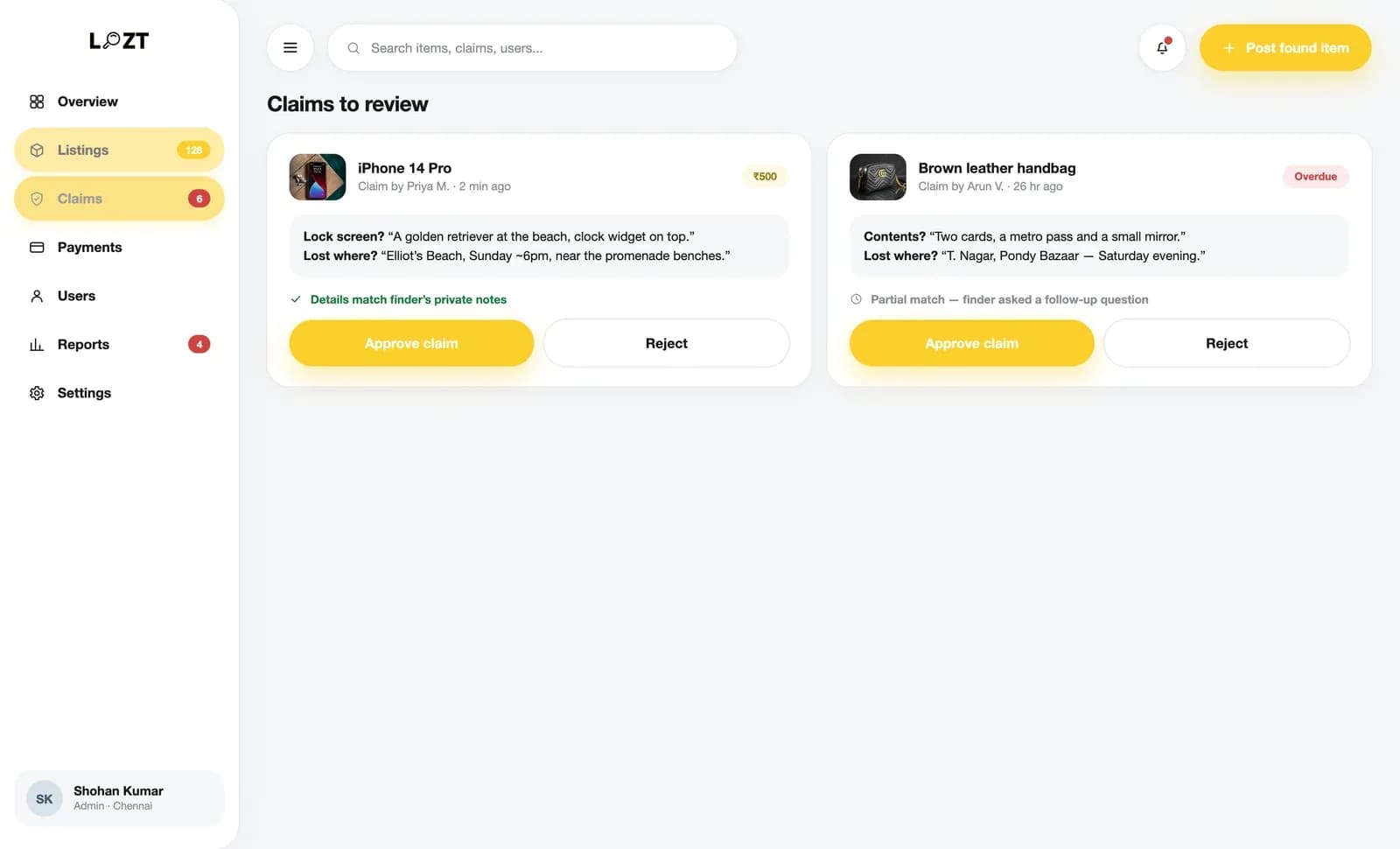
Claims arrive as review cards pairing the owner's verification answers with the finder's private notes, marked as matching, partially matching, or awaiting a follow-up. Approve or reject in one action; anything past the SLA is flagged Overdue.
- 04Payments
Payments
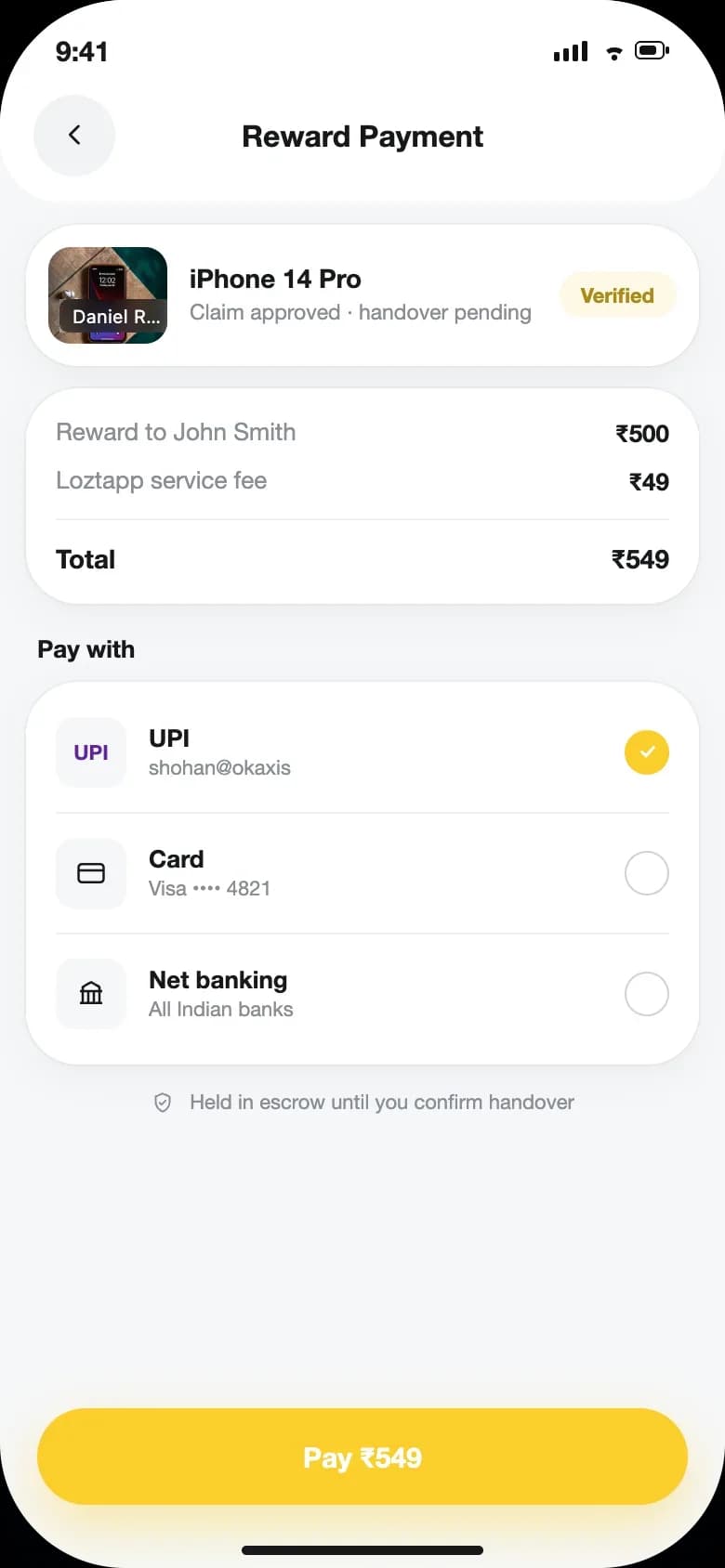
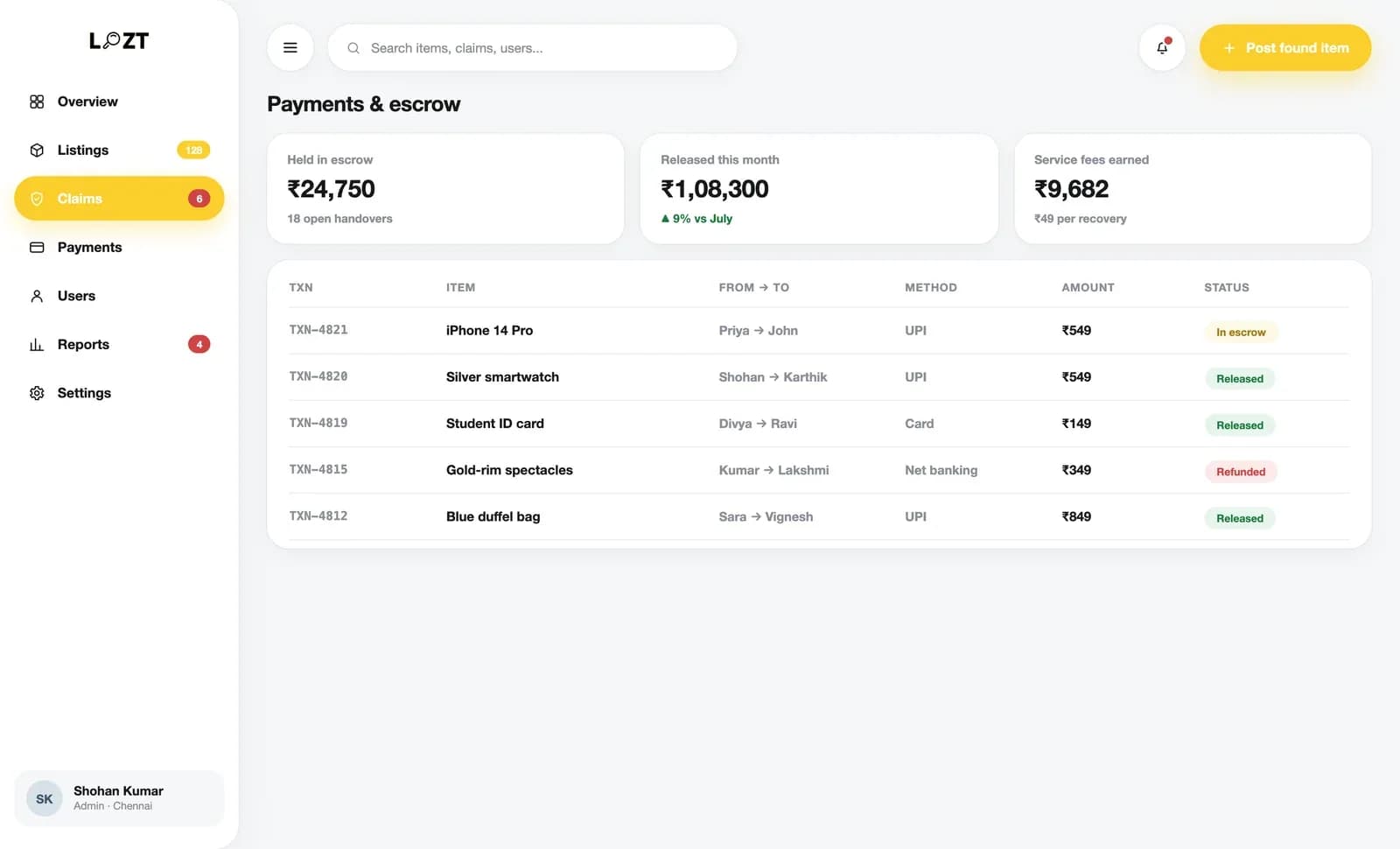
One escrow ledger — held, released this month, service fees earned — and a transaction list carrying the item, both parties, the method (UPI, card or net banking) and its state from In escrow to Released to Refunded.
- 05Users
Users
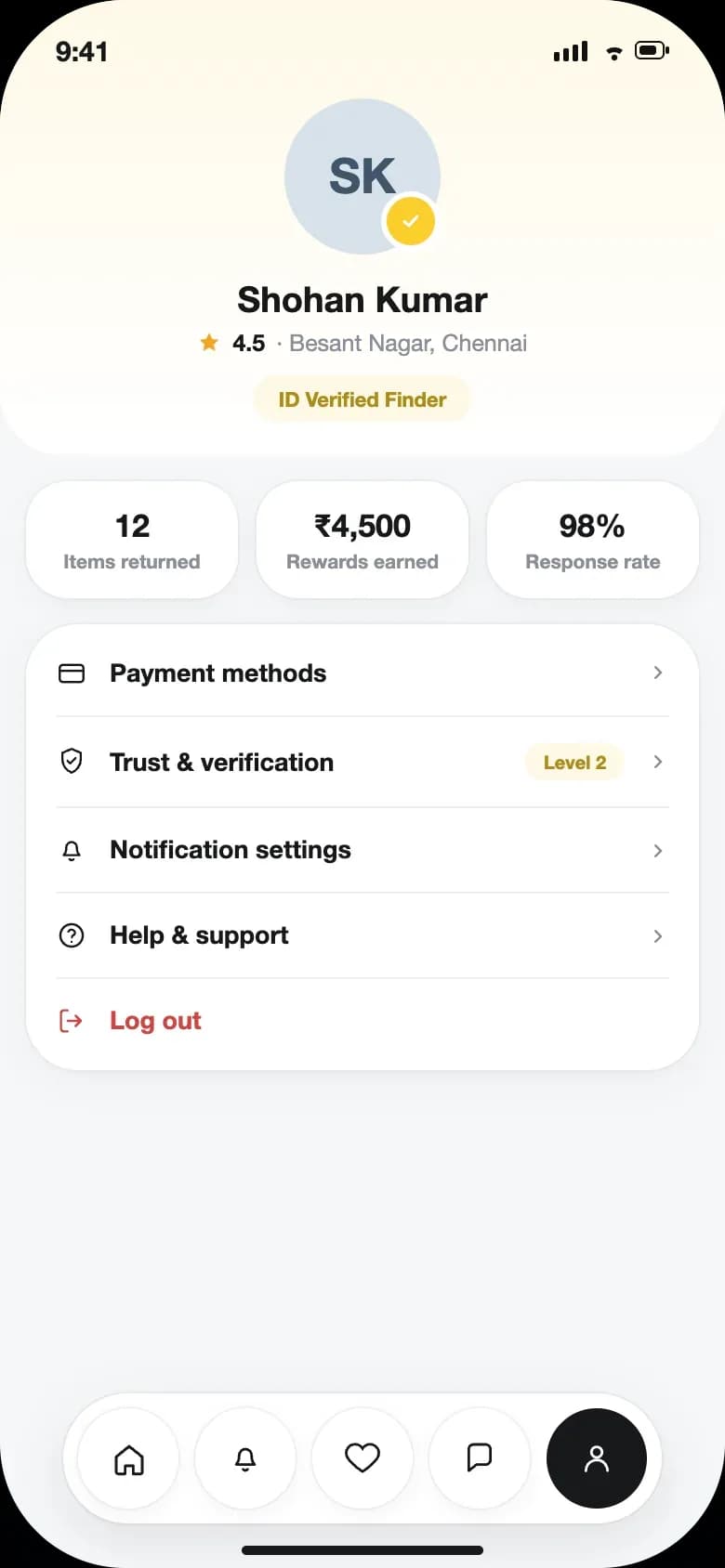
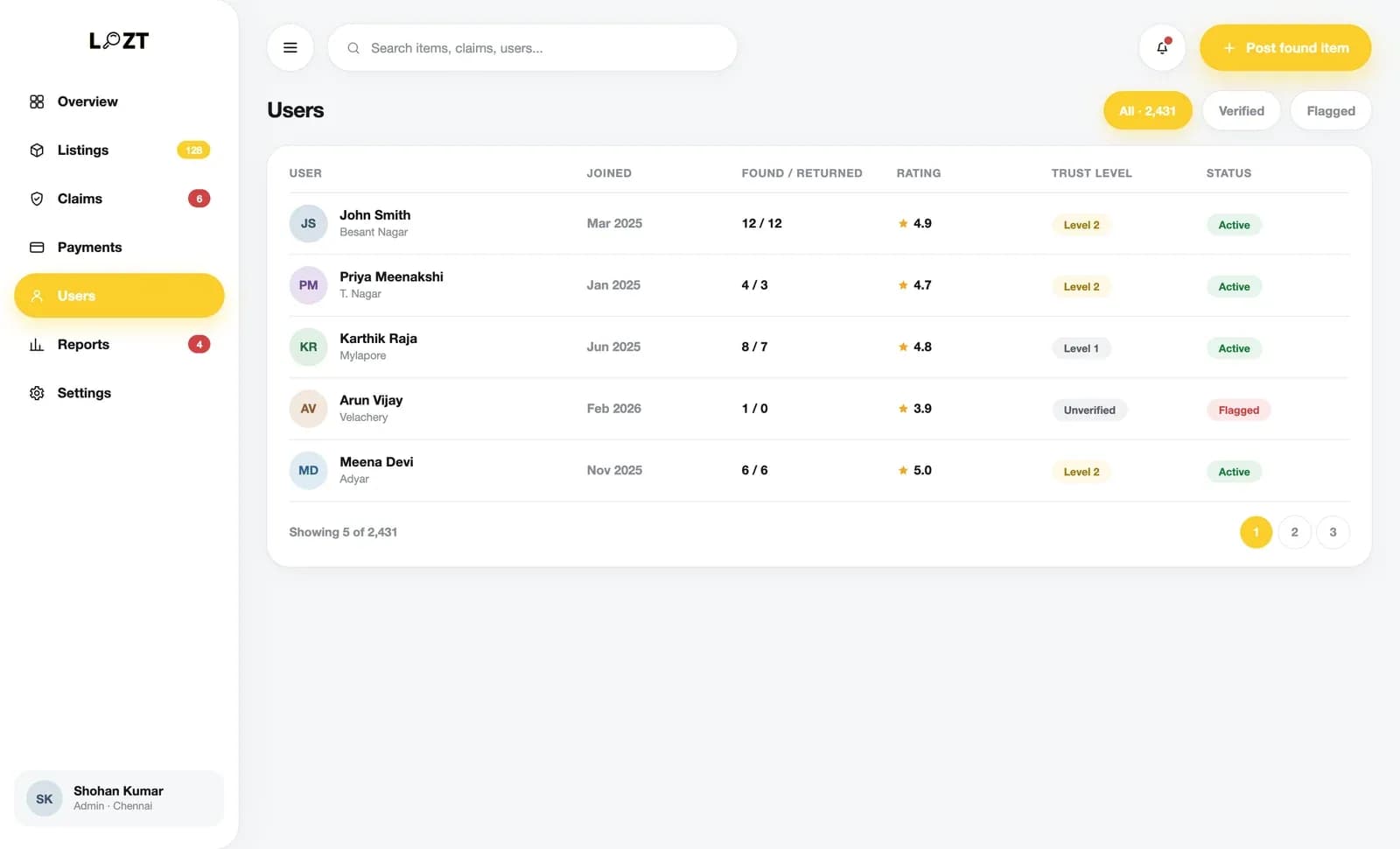
The trust model, made legible: when someone joined, how many items they have found versus returned, their rating, their verification level, and whether they are active or flagged — so a badge on a public listing means something specific.
- 06Reports
Reports
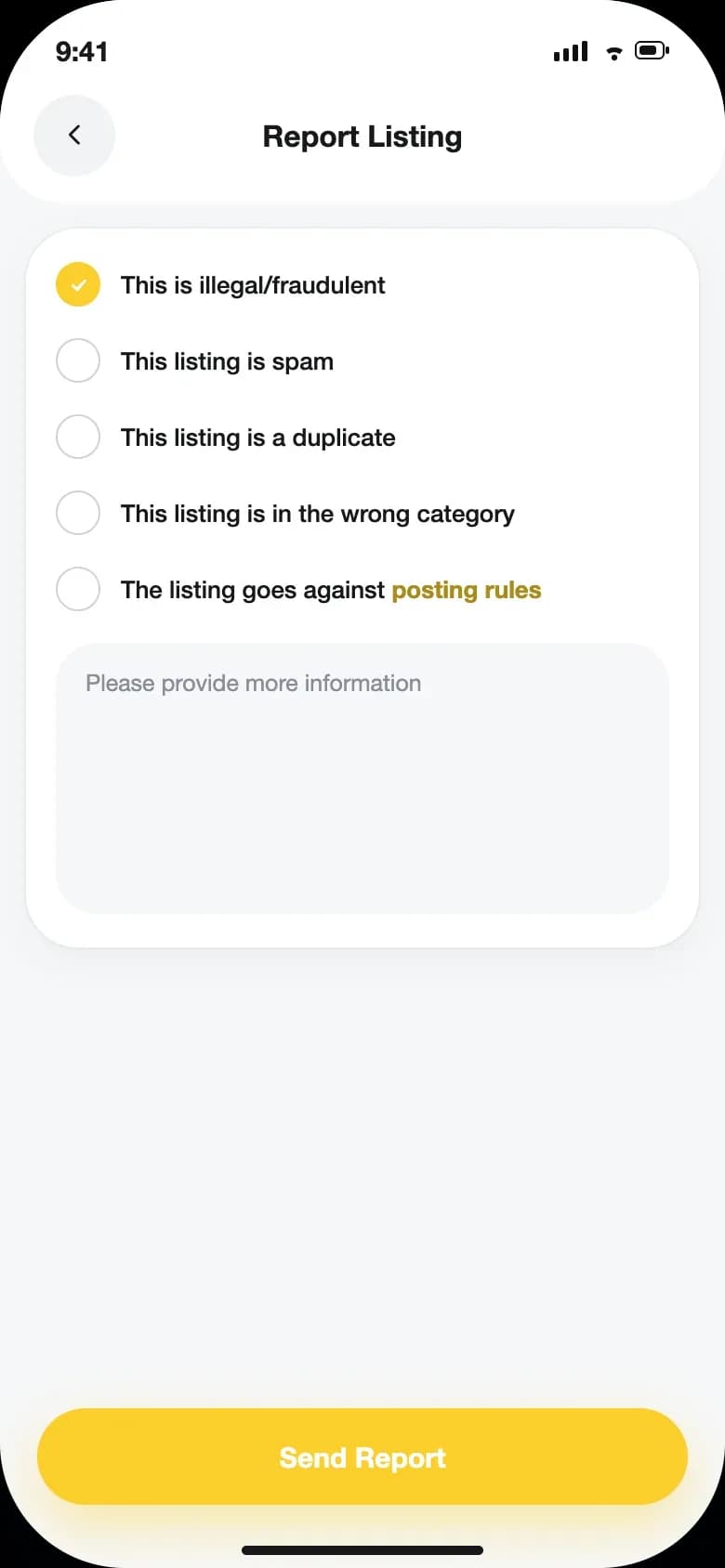
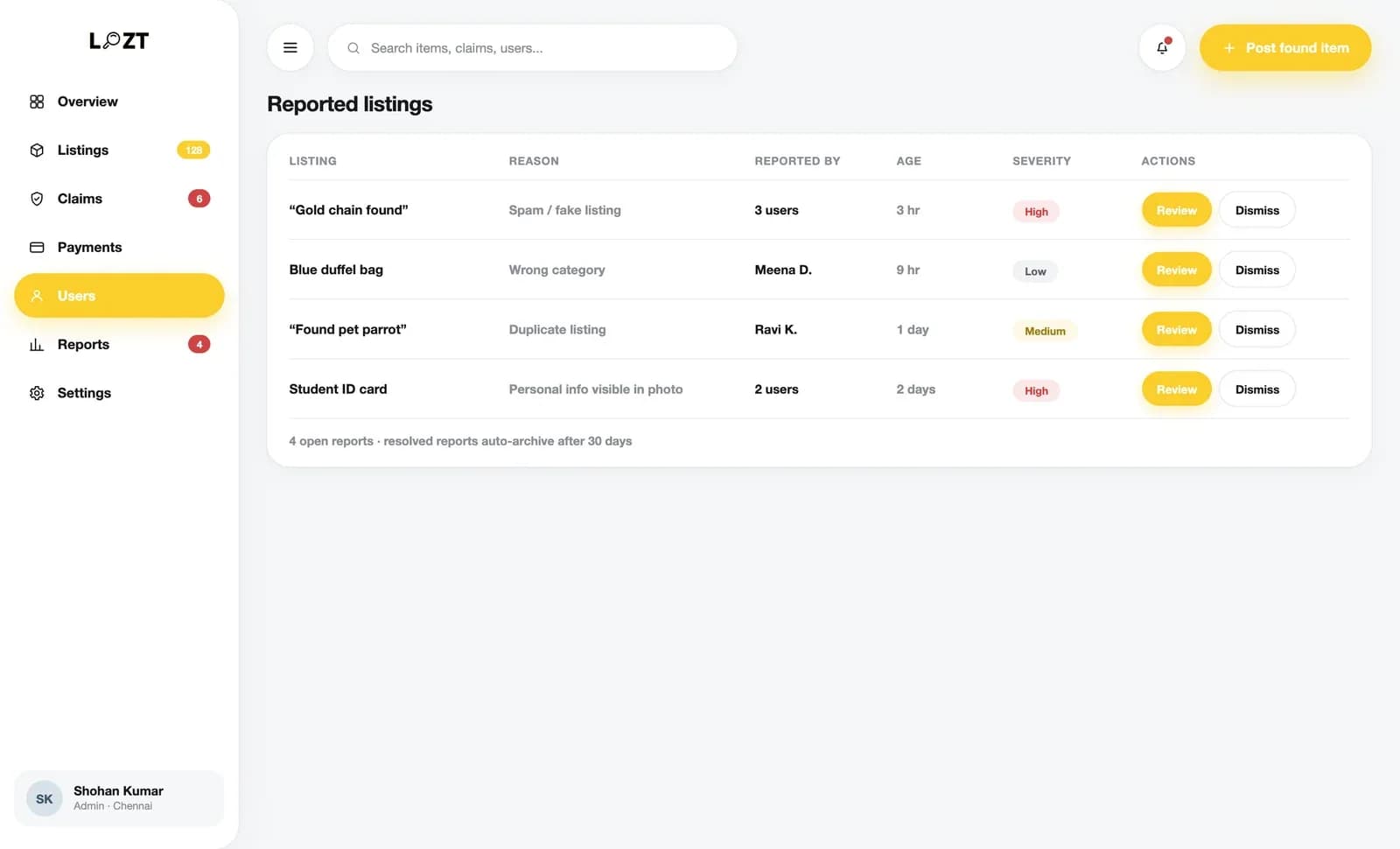
The moderation queue, severity-ranked across spam, duplicates, wrong category and personal information visible in a photo — with who reported it, how long it has been open, and Review or Dismiss on every row. Resolved reports auto-archive after thirty days.